
Resources
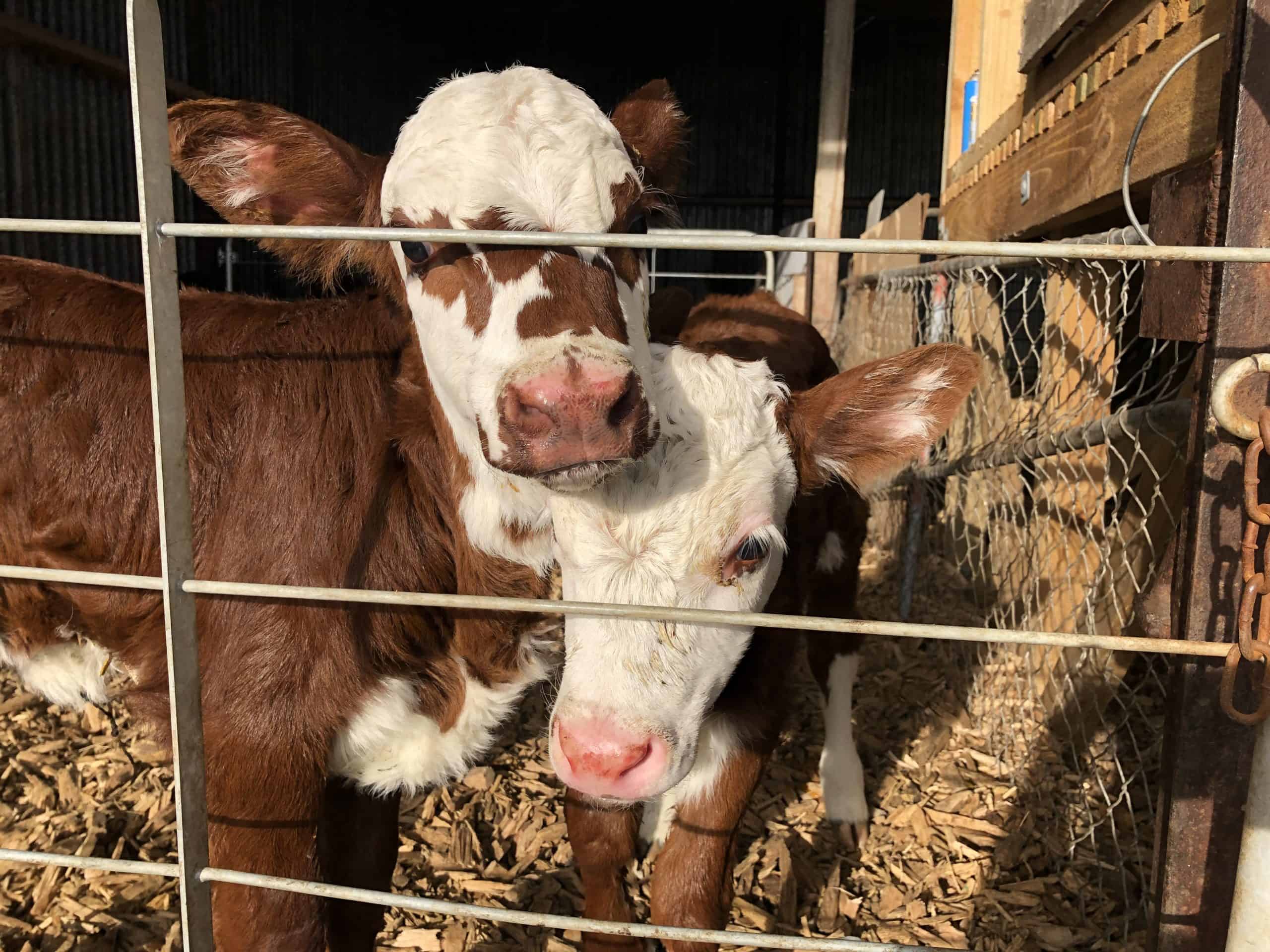
The better start a calf has in life, the better animal they will be in years to come, and in turn, a better producing cow.
Rearing a quality calf starts with good nutrition and management of the cow to support a healthy, robust calf at birth followed by quality nutrition and management practices during rearing.
NZAGBIZ CALF REARING GUIDE - CALVES:
Designed to provide you with best practice rearing guidelines, informed by recent scientific and applied research, the product options available to you and our recommended usage.
Calf Rearing Guide: CLICK HERE
CALF REARING ANSWERED VIDEO SERIES:
Produced in partnership with NZAgbiz and AgResearch, this comprehensive video series covers essential aspects of calf rearing, including colostrum management, weaning, rumen development, and care and welfare.
Watch the FULL video series HERE.
MILK FEEDING FARN ON A FARM SERIES:
You’re not just feeding calves—you’re investing in your future herd. Feed choices today impact tomorrow’s productivity. NZAgbiz has partnered with AgResearch to produce a series of videos, designed to help you make an informed decision about which liquid feeds are best for you and your animals.
- When it comes to animal nutrition, whole milk is hard to beat – that’s why it’s best to choose a quality calf milk replacer, that resembles natural whole milk from the cow. Learn about how milk composition impacts calf digestion.
- Watch Video →
- When a calf drinks whole milk or a curding milk replacer, it bypasses the rumen and enters the abomasum, where it curds and is slowly digested.
- Watch Video →
- What’s the difference between casein vs. whey-based CMRs? Michael Shallcrass, Senior Veterinary Expert explores this topic. Natural cow’s milk contains 80% casein and is vital for early growth and rumen development.
- Watch video →
- Discover our top tips and tricks for easily mixing CMR, for a hassle-free experience.
- Watch video →
- Dr Ajmal Khan discusses why it’s important to choose a good quality milk replacer, that resembles natural milk.
- Watch video
COLOSTRUM:
- Dr Ajmal Khan and Senior Veterinary Expert Mike Shallcrass take us through best-practice principles in the calf shed.
- Watch video: https://www.youtube.com/watch?v=avddVfDq__k
- The 3 Q’s of colostrum—Quality, Quantity, and Quickness—are crucial for calf health. Senior Veterinary Expert Mike Shallcrass takes us through each in detail: https://www.youtube.com/watch?v=V_HibEKIF7Q
- Dr Ajmal Khan and Senior Veterinary Expert Mike Shallcrass explain what is needed to achieve success in weaning young calves.
- Watch video: https://www.youtube.com/watch?v=YVr5dLJjmpc
- While there is no hard and fast rule on when it’s the right time to wean, Dr Ajmal Khan and Senior Veterinary Expert Mike Shallcrass talk us through the options, and key considerations with each.
- https://www.youtube.com/watch?v=j4jefZ8ngq4
- Initiation of solid feed intake is necessary for rumen development before there is a change in diet from milk to other solid feeds. Dr Ajmal Khan and Senior Veterinary Expert Mike Shallcrass take us through the steps ->
- https://www.youtube.com/watch?v=spU9TmTuULI
- Both grain-based feeds, such as muesli and pellets, and high-fibre forages, including straw and hay, are essential in promoting optimal rumen development.
Learn more -> https://www.youtube.com/watch?v=MHX17hTawSI
WEBINARS:

Calving season raises many questions, so we recently hosted a webinar with calf-rearing experts from AgResearch, Fonterra, and NZAgbiz to address the most frequently asked questions.
RECENT STUDIES AND RESOURCES:
Abomasal bloat in calves: what causes it and how to reduce the risk
Bloat is an over-expansion of the abomasum soon after milk feeding. It is due to gas (produced by the normal fermentation of feed) building up and being unable to escape.
Abomasal bloat is typically seen in calves five to 10 days old. The exact cause of abomasal bloat in calves is unknown, but certain things must happen to produce the condition:
- An excess of fermentable carbohydrate in the abomasum (from milk, milk replacer or electrolyte solution)
- A fermentative enzyme (produced by bacteria, many of which are present in the calf stomach all the time)
- Something that has slowed the rate of abomasal emptying. The pre-weaned calf must have milk to grow and develop, but anything that slows down the rate at which milk empties from the abomasum will give the bacteria present more time to ferment this essential feed.
It’s hard to identify the specific reason for abomasal bloat but understanding the main risk factors for the condition, correctly and consistently mixing a proven milk replacer and always following best rearing practice will help.
2 tblspns glucose
1 dstspn baking soda
1 heaped tspn common salt
2 ltrs water
Add molasses or caramel flavour to make it more palatable. Make up a 2 ltr bottle of concentrate and dilute as required.
2 1/2 t glucose (or sugar)
1 1/4 t citric acid
3/4 t potassium chloride (from the vet)
1t salt
1/2 t baking soda
2.5L warm water
All can be purchased from from Bin Inn or the supermarket, except potassium chloride.
1tsp salt
1tsp baking soda
2 tbls manuka honey
2 tbls dextrose to one litre warm water
10g salt
10g sodium bicarb
100g dextrose (you can buy big bags of dextrose from Binn Inn)
1tsp salt
4tbs glucose
1tbs baking soda
Add to 2.5ltrs of warm water. Mix thoroughly.
1kg salt 300g potassium chloride
1kg baking soda
10kg glucose
Calf drencher
Combine ingredients.
Solution is sufficient for 100 doses. Dose = Add 1/2 cup/123gms of electrolyte to 2L of water.